
Description
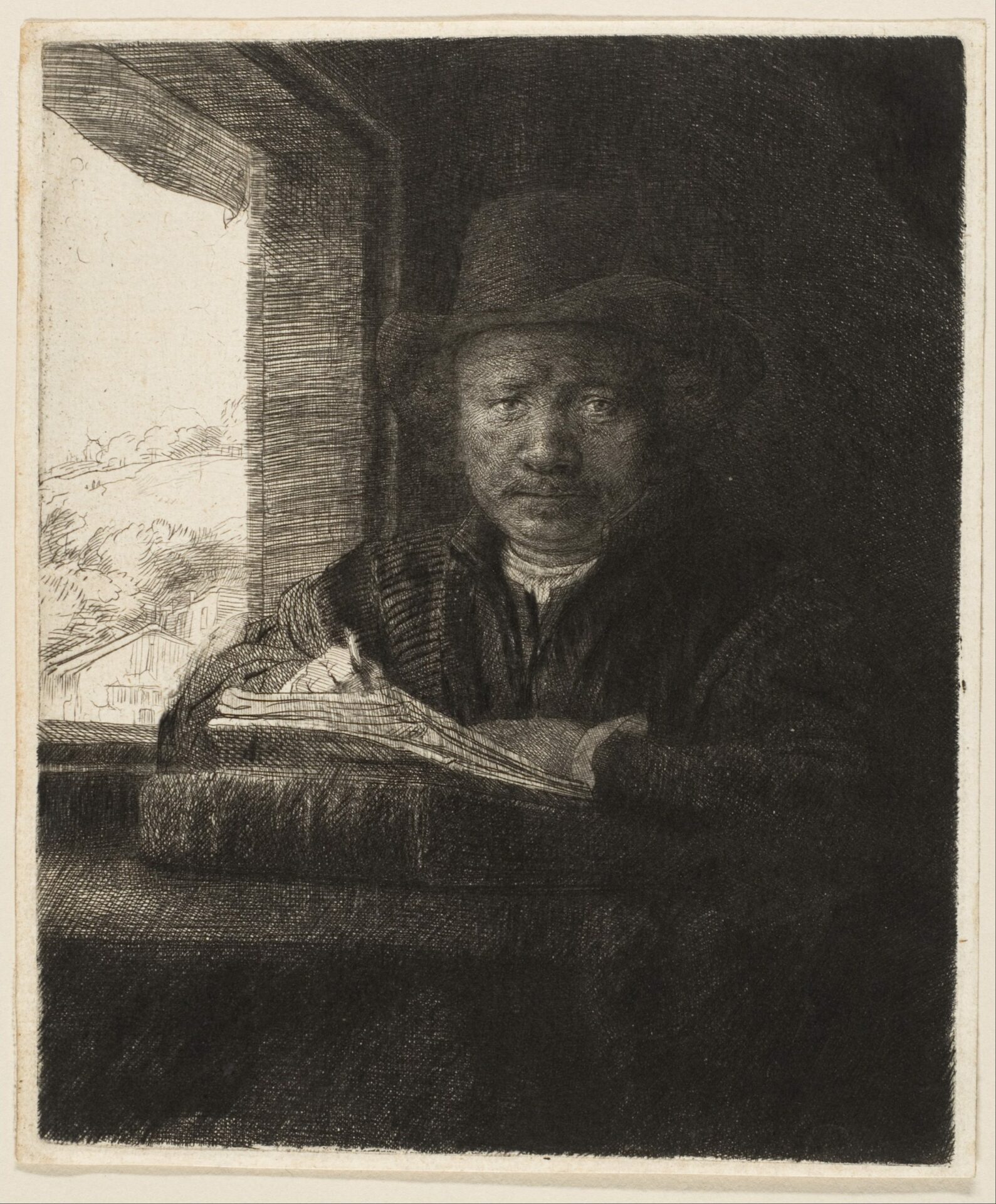
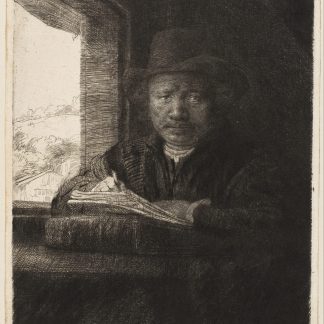
In Self-Portrait Etching at a Window, Rembrandt sits at a table beside the bright opening, holding an etching tool. The opening at the left contrasts with the darker room and the artist’s position near the center and right. Rather than placing him against an empty background, the image connects his likeness with a working setting and the light entering it.
Made in 1648, the work combines etching, drypoint and burin; this impression is the fourth of nine states. The subject joins a portrait with the activity of making a print, allowing the held tool and nearby table to contribute to the artist’s presentation of himself. The window gives the room an immediate source of illumination. Rembrandt’s face remains important, but the surrounding arrangement also makes looking, light and manual work part of the image’s meaning.
Read our guide to giclée prints or browse the Rembrandt collection.
Reviews
There are no reviews yet.