Description
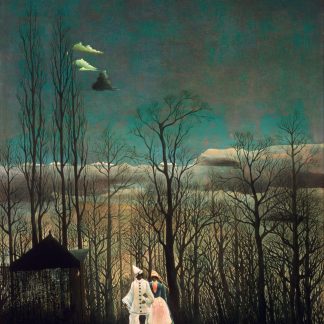
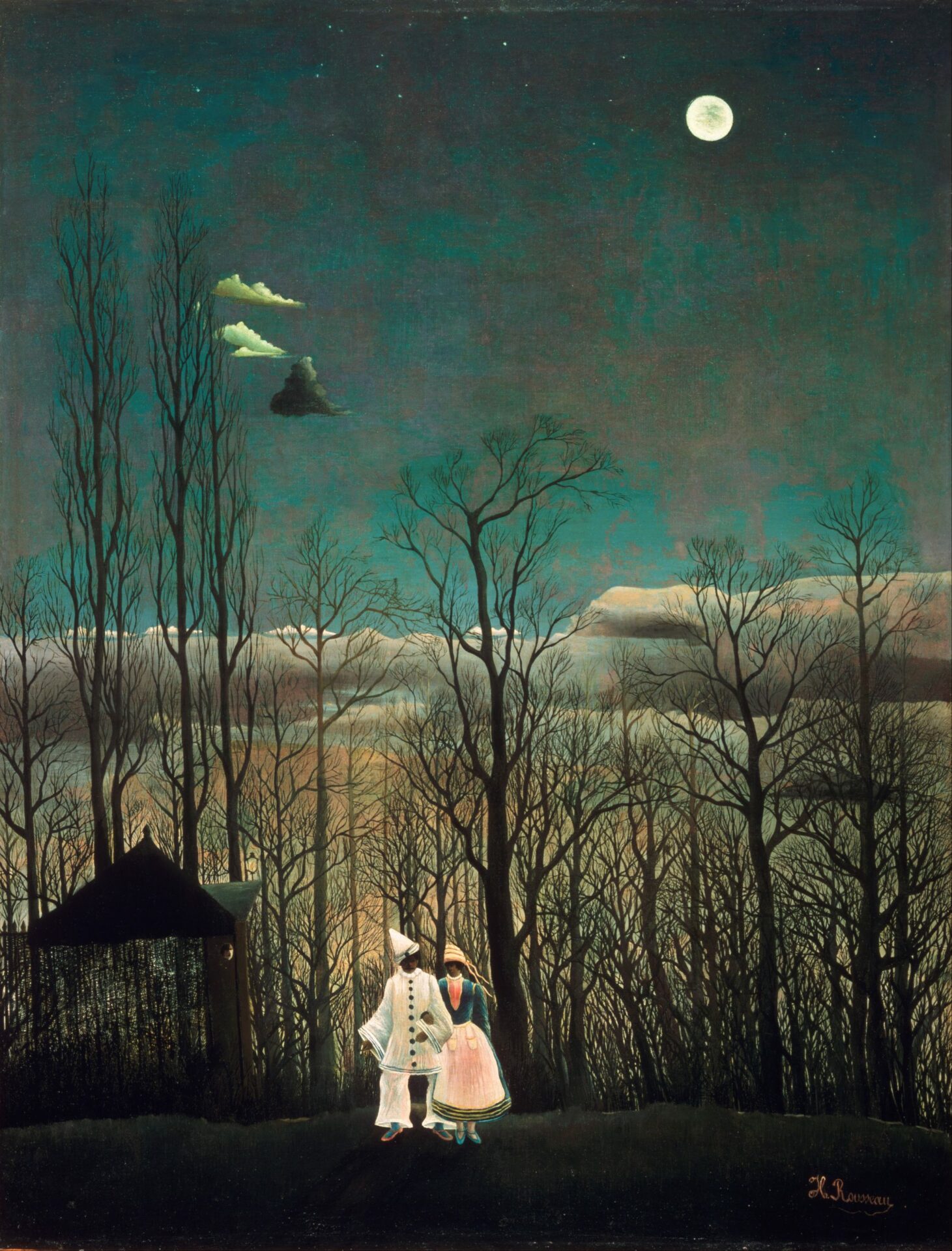
Carnival Evening by Henri Rousseau places a costumed couple beneath a vast, moonlit sky. Bare branches form a delicate lattice around the figures, whose pale clothing glows against the dark ground. A small structure at the left and isolated lights deepen the sense that something familiar has become quietly strange.
Painted in 1886, the scene brings together a festive subject and a winter landscape almost emptied of activity. The couple appears small beneath the trees, and the broad sky gives their encounter an unexpected stillness. Rousseau’s clear outlines and deliberate arrangement allow each shape to retain its own presence.
Now in the Philadelphia Museum of Art, Carnival Evening captures the imaginative quality that makes Rousseau’s work so distinctive. Its mystery grows from ordinary details—costumes, branches, moonlight—combined in a setting that feels suspended between waking life and a dream.
He was born in Laval in the Loire Valley into the family of a plumber. He attended Laval High School as a day student and then as a boarder, after his father became a debtor and his parents had to leave the town upon the seizure of their house. He was mediocre in some subjects at the high school but won prizes for drawing and music. He worked for a lawyer and studied law, but “attempted a small perjury and sought refuge in the army,” serving for four years, starting in 1863.
Read our guide to giclée prints or browse the Henri Rousseau collection.