
Expressionism
Expressionism encompasses approaches to art that emphasize subjective experience through color, line and altered form. It developed prominently in early twentieth-century Germany and Austria, across painting and other media. Its themes include anxiety and urban alienation, but also nature, spirituality and emotional vitality.
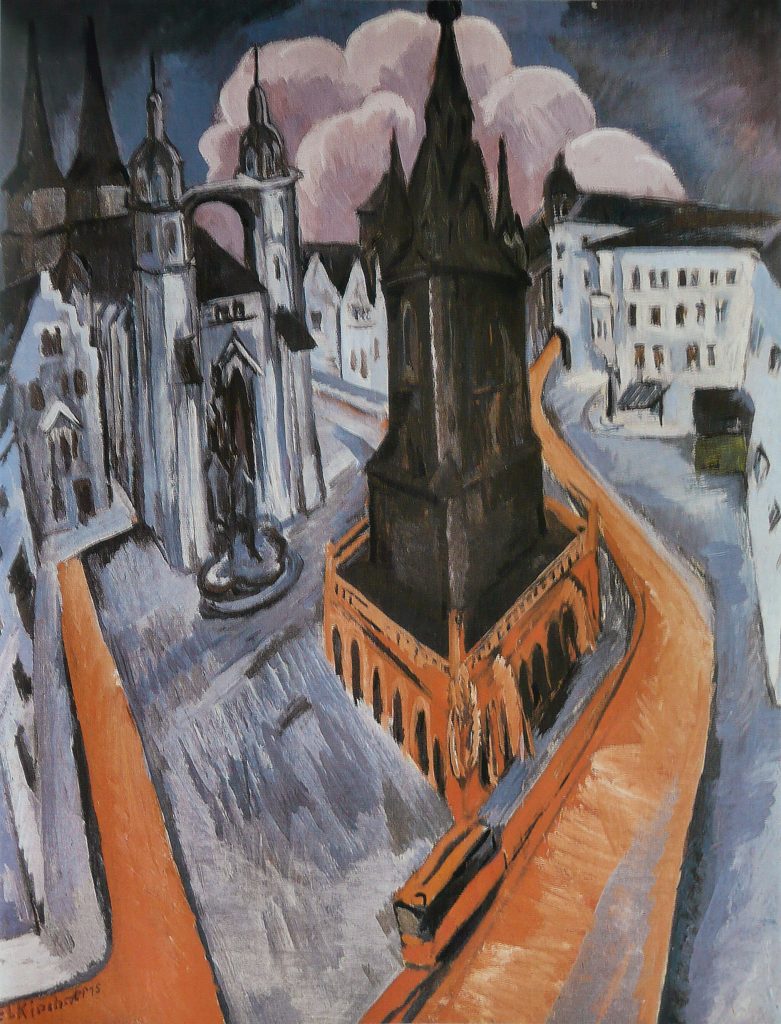
Expressionism was not one unified group. Die Brücke formed in Dresden in 1905 and included Ernst Ludwig Kirchner; Emil Nolde was briefly associated with it. In Munich, Wassily Kandinsky and Franz Marc began organizing Der Blaue Reiter exhibitions in 1911.
The Expressionists rejected the traditional approach to painting and instead sought to convey the inner emotional experience of the artist. They were heavily influenced by contemporary developments in psychology, philosophy, and literature, as well as by the shifting political and social landscape of Germany in the early 20th century.
Expressionist painters often used distorted forms, bold colors and emphatic lines to heighten a work’s emotional effect. These choices could express tension or unease, but they could also communicate energy, wonder or a spiritual response to the world.
Another key characteristic of Expressionist painting is the emphasis on individualism and subjectivity. The artists were less concerned with creating a realistic representation of the world around them, and instead focused on expressing their own subjective experiences and emotions. This approach often resulted in paintings that were highly personal and idiosyncratic, reflecting the unique vision of the individual artist.
Kirchner’s city scenes use angular figures and vivid colors to give modern urban life an intense atmosphere. Nolde is known for forceful color and expressive brushwork. Kandinsky explored relationships among color, music and spiritual experience, while Marc frequently used animals and non-naturalistic color to explore his ideas about nature.
In conclusion, Expressionism was a significant departure from the traditional style of painting that was popular in the early 20th century. Its emphasis on the emotional and psychological aspects of the human experience, distorted and exaggerated forms, and individualism had a significant impact on the art world. The major contributors to the Expressionist style, including Kirchner, Nolde, Kandinsky, and Marc, continue to be celebrated for their innovative approach to painting and their contributions to the art world.