
The Calling of Saint Matthew
“The Calling of Saint Matthew” is a masterpiece of Baroque art, painted by Michelangelo Merisi da Caravaggio in 1599-1600. The painting depicts the moment when Jesus Christ calls the tax collector Matthew to become one of his disciples, and it is notable for its dramatic use of light and shadow, as well as its emotional intensity.
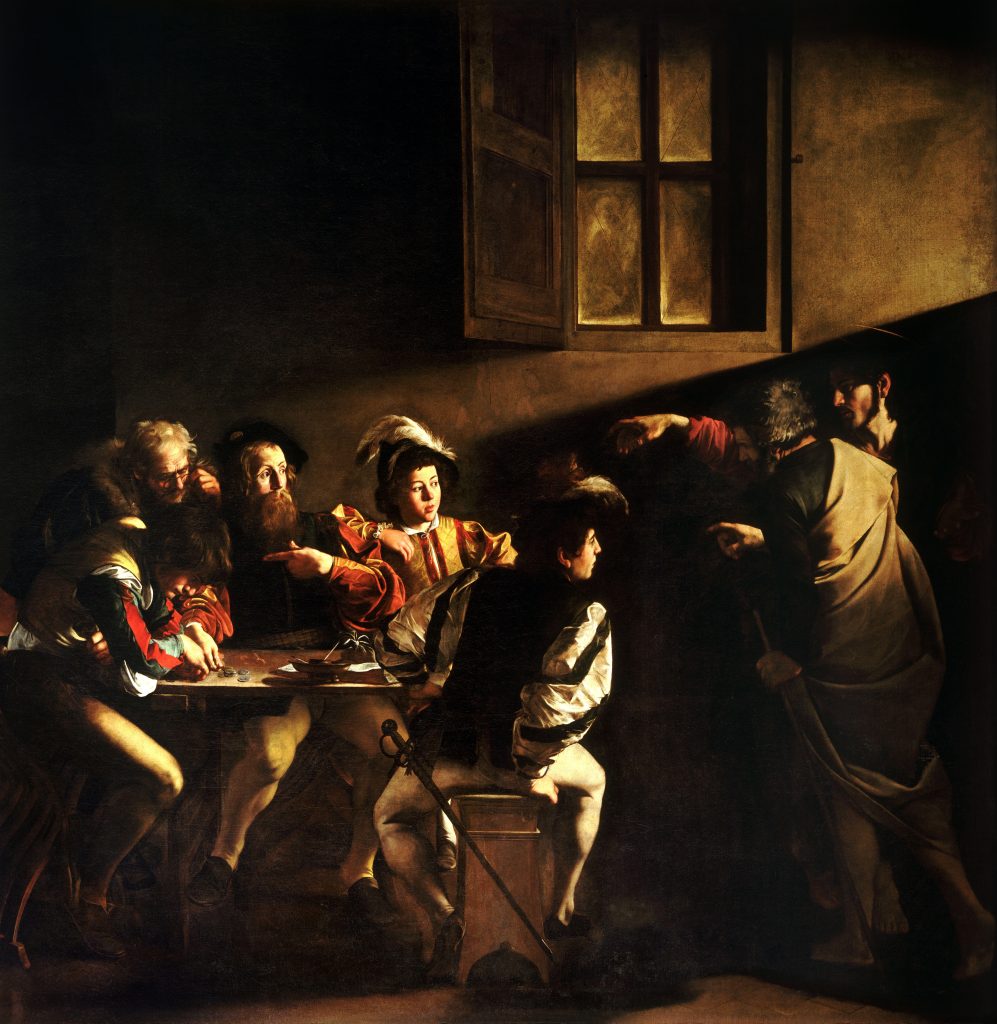
The painting is set in a dimly lit room, with a group of men gathered around a table. On the viewer’s right, Jesus extends his hand toward the group. Some figures turn toward him while others remain occupied with coins. The gestures and contrasting reactions draw attention to the moment of the call without making every figure’s response unambiguous.
Caravaggio uses a strong contrast between light and shadow to give the scene its dramatic force. A beam of light enters from the viewer’s right and cuts across the room toward the men at the table, emphasizing faces and gestures against the dark interior. The lighting connects Christ’s arrival with the interruption of an ordinary activity.
Another notable aspect of the painting is the way that it emphasizes the emotional intensity of the moment. The expressions on the faces of the men in the painting are deeply emotional, with some looking shocked or surprised, while others are more contemplative. The painting conveys a sense of the importance of the moment, and the gravity of the decision that Matthew must make.
The painting has been interpreted in many different ways over the years. Some see it as a reflection of Caravaggio’s own spiritual beliefs, while others see it as a commentary on the power of divine intervention. Still, others see it as a reflection of the social and political upheavals of the time, with the emphasis on the importance of individual choice and action.
In conclusion, “The Calling of Saint Matthew” is a masterpiece of Baroque art, notable for its dramatic use of light and shadow, emotional intensity, and its powerful message about the importance of individual choice and action. The painting is a testament to Caravaggio’s skill as an artist, and it continues to fascinate and inspire new generations of art lovers and religious enthusiasts to this day.
Explore more biblical scenes and devotional subjects in our Religious Art & Prints collection.