
Printmaking
Printmaking encompasses techniques for transferring an image from a prepared surface, such as a block, plate or screen, onto paper or another material. Its history extends well before fifteenth-century Europe: printing on paper developed in China around the seventh or eighth century. Different processes produce distinctive effects, from the bold shapes of a woodcut to the fine lines of an engraving.
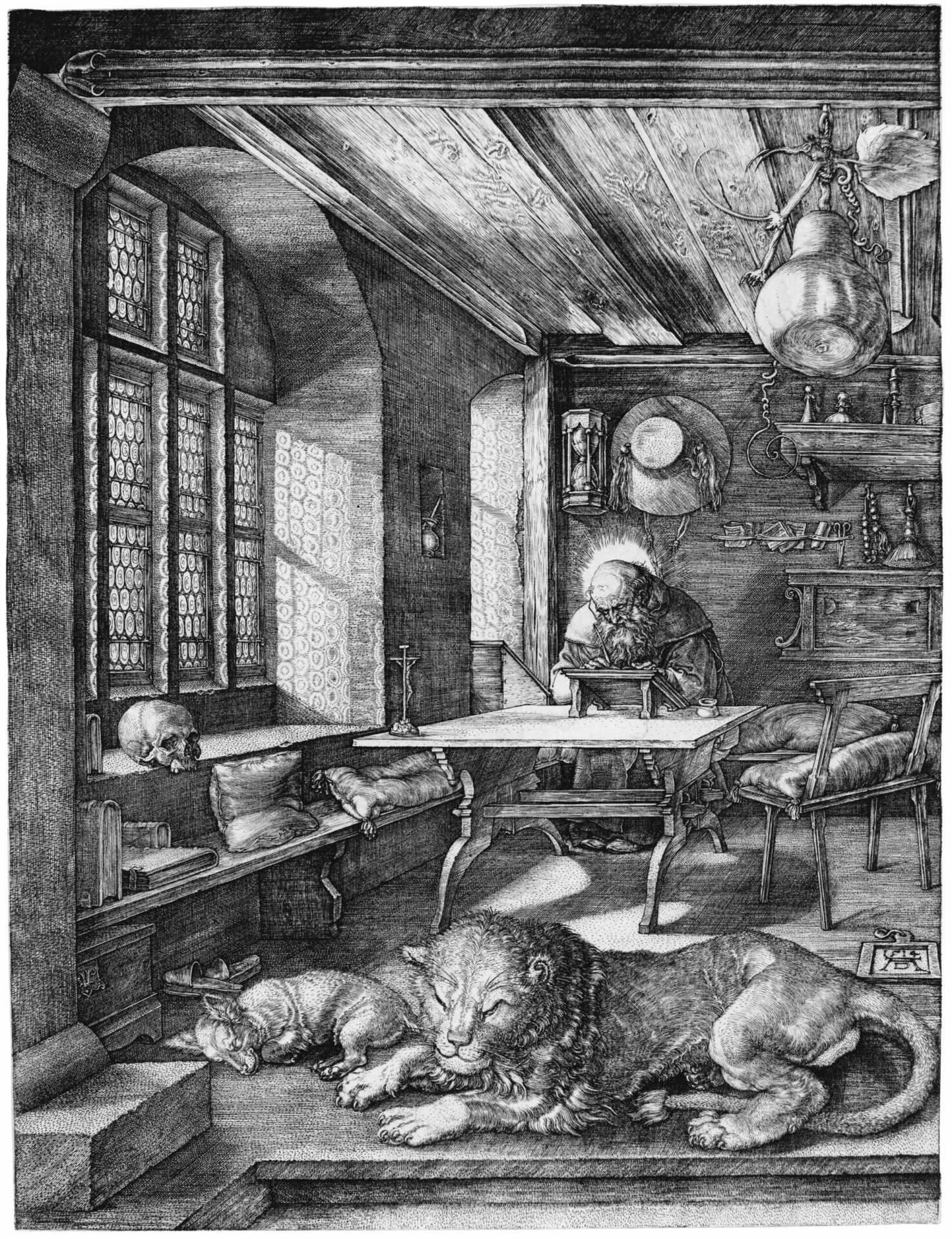
Intaglio Printmaking
Intaglio prints are made from ink held in recessed lines or areas of a plate, usually metal. In engraving, the artist cuts directly into the plate with a tool. In etching, the artist draws through an acid-resistant ground; acid then bites the exposed metal. After inking, the plate surface is wiped clean, leaving ink in the recesses. Pressure from a press transfers that ink to the paper. Intaglio methods can produce fine lines and rich tones.
Relief Printmaking
Another popular printmaking technique is relief printing, which involves carving away the areas of a block or plate that the artist does not want to print. The remaining raised areas are inked, and then the plate is pressed onto paper or another surface. This technique can be done with various materials, including wood, linoleum, and rubber. Woodcut is one of the earliest and most popular forms of relief printing. It is known for its bold lines and strong contrast.
Lithography Printmaking
Lithography is a planographic process that uses the principle that grease and water repel one another. The artist draws on a prepared stone or metal plate with a greasy material. After chemical treatment, the dampened non-image areas repel oil-based ink while the image accepts it. A press transfers the inked image to paper. Lithography can reproduce effects ranging from fine lines to broad tonal washes.
Screen Printing
Screen printing, also known as silkscreen printing, is a popular technique used for printing on various materials, including fabric, paper, and plastic. It involves creating a stencil on a mesh screen and then using a squeegee to press ink through the open areas of the stencil onto the surface below. Screen printing allows for a high degree of control and precision, making it a popular choice for commercial printing.
Monotypes and Monoprints
A monotype is typically made by applying ink or paint to a smooth surface, such as glass or metal, and transferring the image to paper. It generally produces one strong impression, although lighter subsequent impressions may be possible. A monoprint combines repeatable elements from a printing matrix with variations such as different inking or added marks, making each impression distinctive. The terms are sometimes used loosely, but this distinction helps explain the processes.
In conclusion, printmaking offers a diverse range of techniques and approaches for artists to explore. Each technique has its unique characteristics, allowing artists to experiment and find their own creative voice. Whether using traditional techniques such as intaglio or relief printing, or more modern methods like lithography or screen printing, printmaking provides endless opportunities for creativity and expression.