
Description
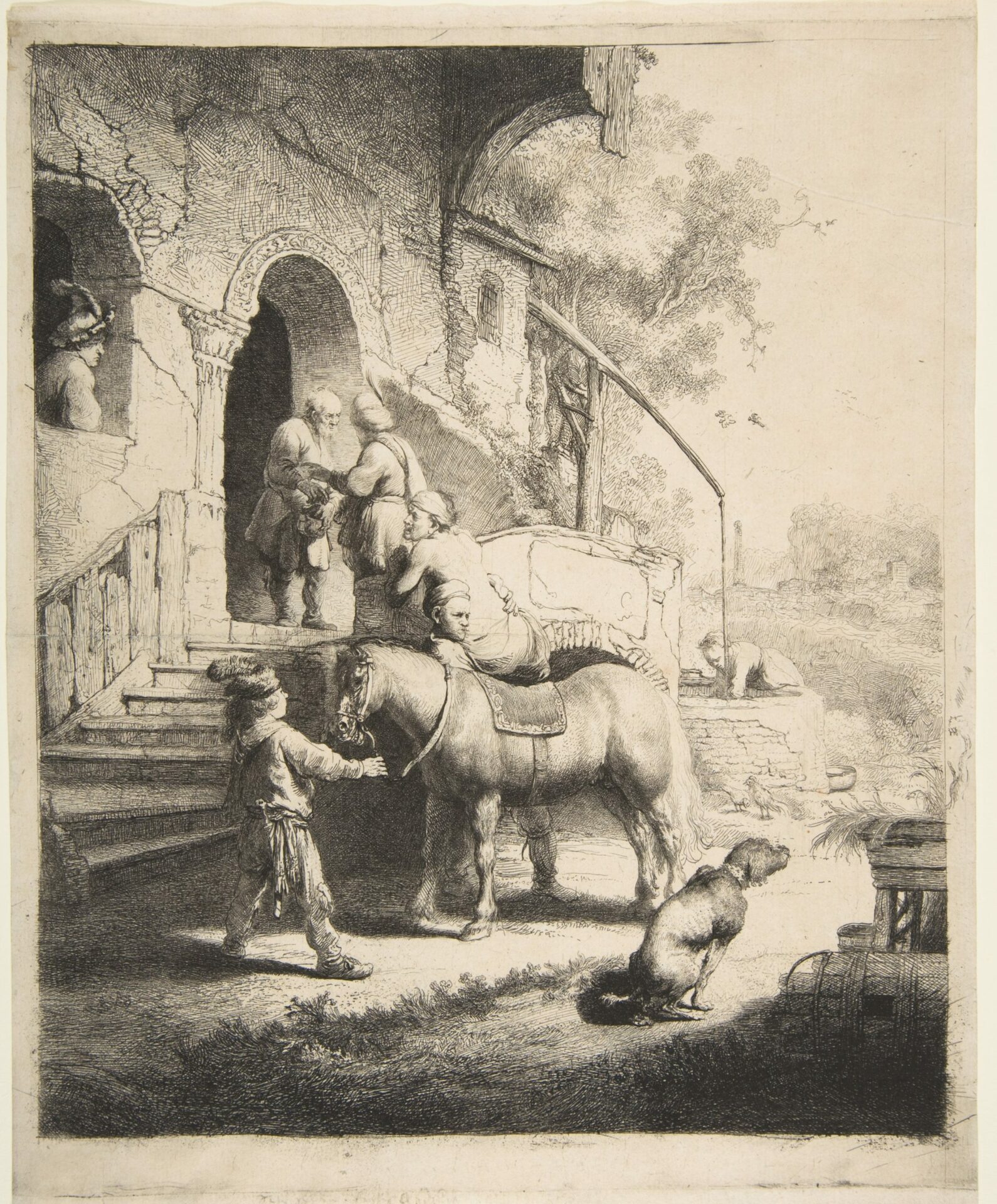
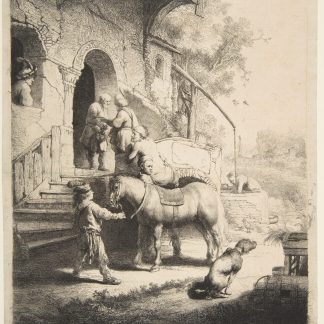
A horse carries an injured person near the center of Rembrandt’s Good Samaritan, with an inn, stairs and attendants at the left and a dog in the right foreground. Arched buildings give the scene a tangible setting. The parable’s act of assistance becomes a practical encounter among people and animals, allowing care to acquire a particular human presence rather than remain an abstract moral theme.
Made in 1633, the print combines etching, engraving and drypoint. Rembrandt brings the narrative into the intimate scale of a work on paper, allowing a particular episode to sustain close attention beyond the words that identify it. The image’s interest lies in the relationship between those offering help and the person receiving it. A sacred story is approached through a recognizable human response, making compassion tangible rather than a detached abstract principle.
Read our guide to giclée prints or browse the Rembrandt collection.
Reviews
There are no reviews yet.