
Description
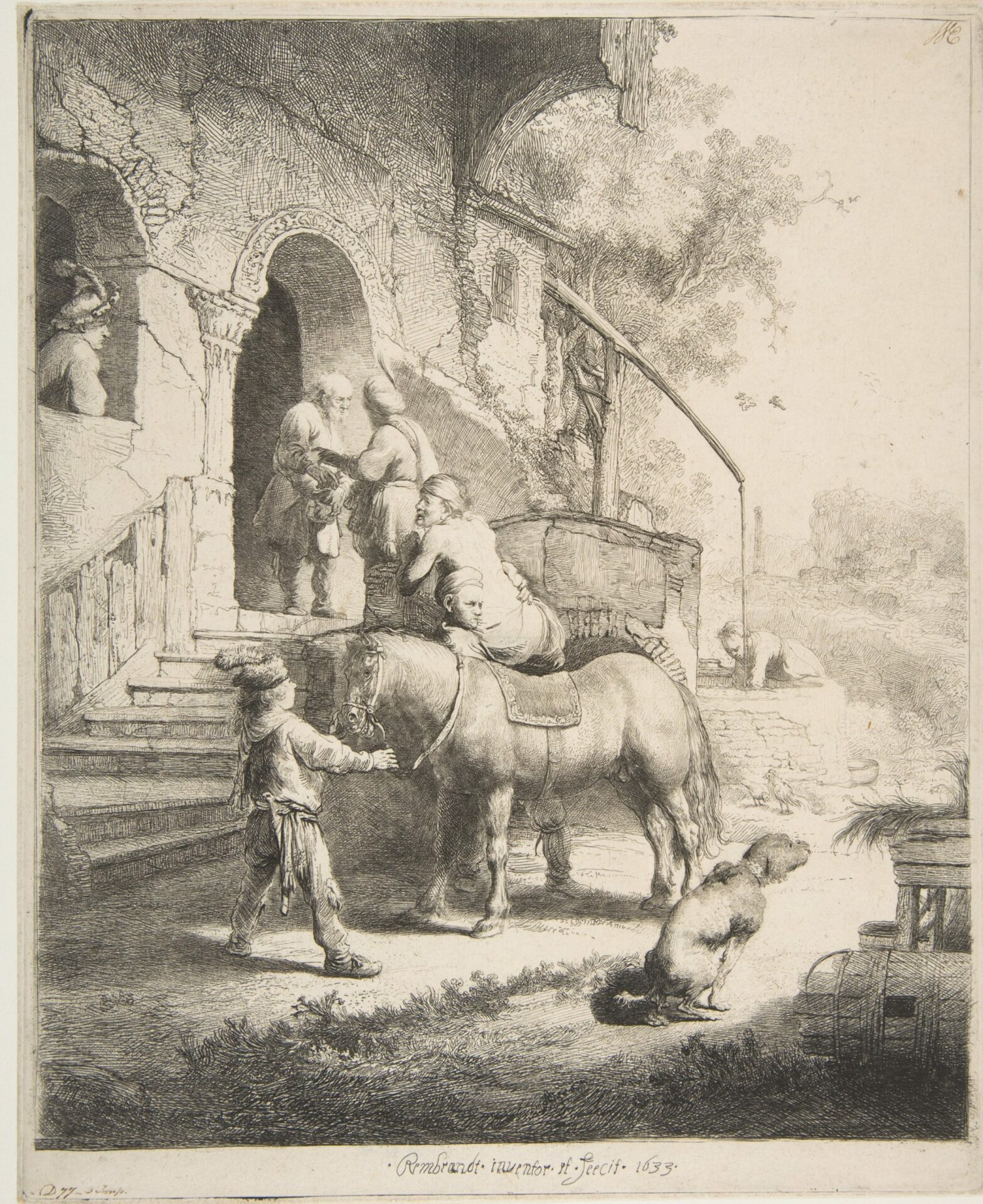
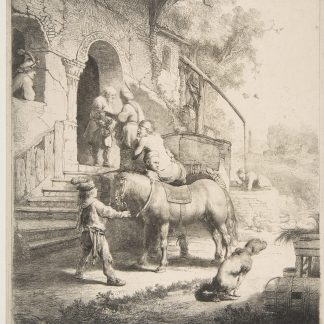
A horse carries an injured person near the center of Rembrandt’s Good Samaritan, with an inn, stairs and attendants at the left and a dog in the right foreground. Arched buildings give the scene a tangible setting. The parable’s act of assistance becomes a practical encounter among people and animals, allowing care to acquire a particular human presence rather than remain an abstract moral theme.
Dated 1633, the work combines etching, engraving and drypoint; this impression is the fourth of four states. The subject asks the viewer to consider compassion as something enacted between people, with a familiar parable taking shape through visible bodies and their relationship. Rembrandt gives that encounter a place within the concentrated field of a print. Its lasting interest lies in the way a religious lesson is attached to the ordinary need for another person’s attention.
Read our guide to giclée prints or browse the Rembrandt collection.
Reviews
There are no reviews yet.