
Description
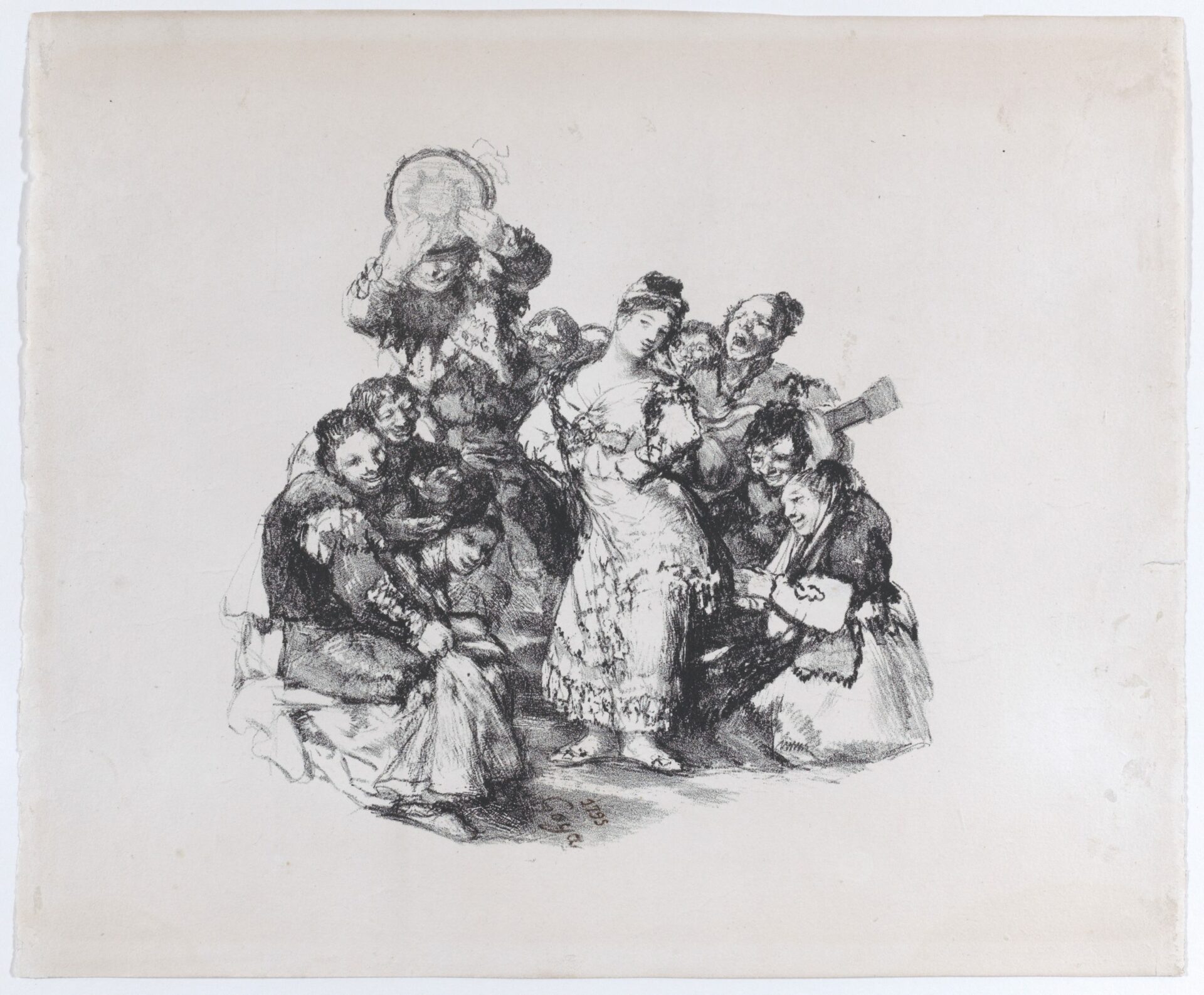
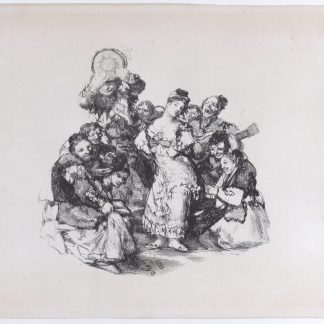
The Andalusian dance (El Vito) is a lithograph by Francisco Goya made around 1824–25. Its subject is a form of jaleo, a dance tradition preceding flamenco, in which a solo female dancer performs to singing, clapping and instrumental accompaniment. The scene brings the movement of the dancer into a lively relationship with the surrounding performance.
Goya created the work in Bordeaux at the workshop of Cyprien Charles Gaulon. Drawing on the lithographic stone with crayon and adjusting the tones with a scraper, he developed contrasts that give the scene depth and animation. The Andalusian dance (El Vito) carries the immediacy of a performance into the image: gesture, rhythm and the shared energy of music become the heart of the composition.
Read our guide to giclée prints or browse the Goya collection.
Reviews
There are no reviews yet.