Description
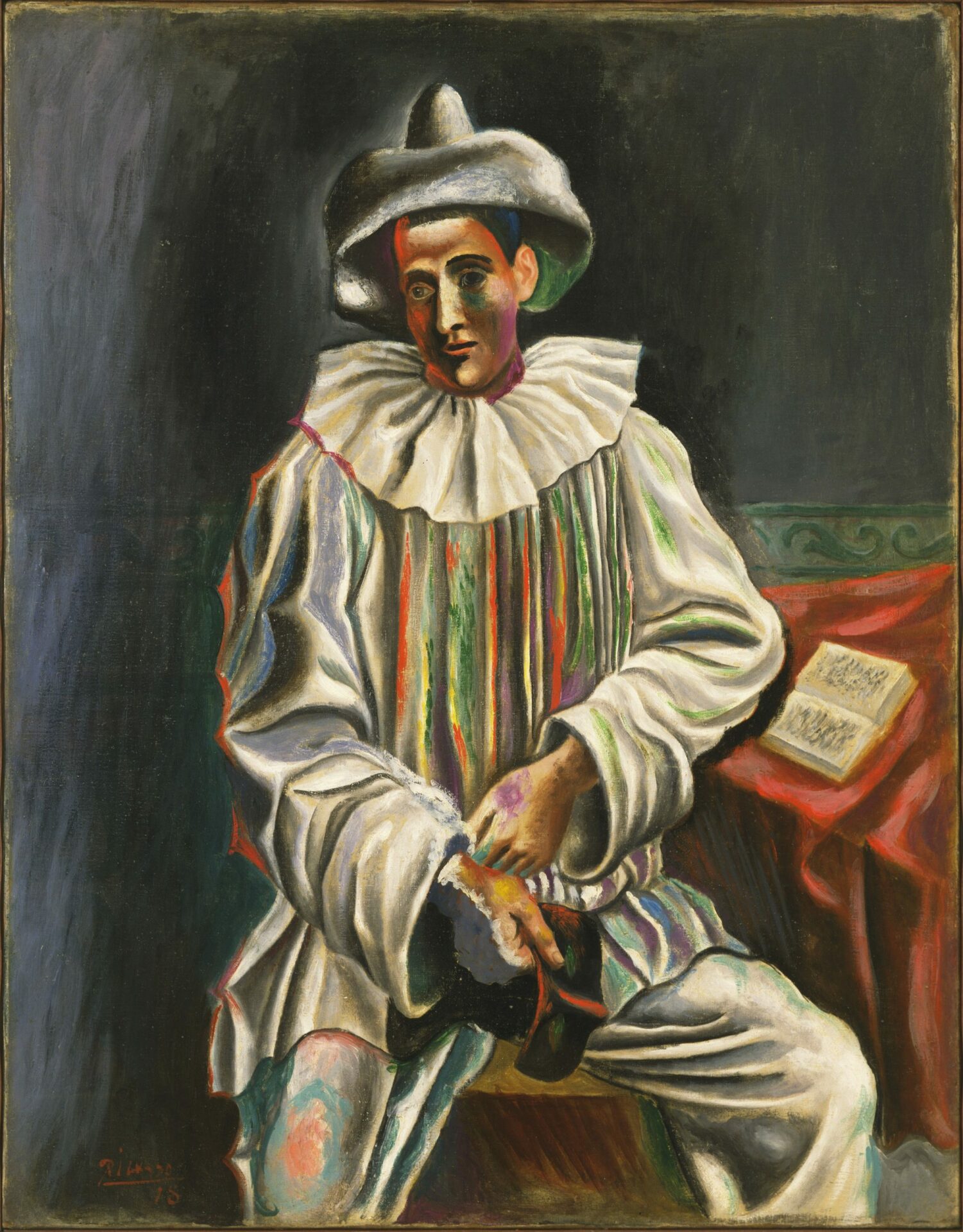
Picasso’s Pierrot presents the familiar theatrical character with a substantial, almost sculptural presence. Seated in a white costume with a striped front and pale hat, the figure stands out against a dark gray setting. A red table at the right adds a strong color accent. Carefully modeled forms replace the fragmented planes of Picasso’s Cubist paintings, allowing the body to occupy a more continuous space.
Painted in Biarritz in 1918, the work shows Picasso exploring a more classical treatment of the figure while continuing to work in other styles. MoMA’s collection study distinguishes this physically grounded Pierrot from the more elusive character of his line drawings. The shift of manner is part of the picture’s meaning: costume, volume, and stillness combine to give a theatrical subject the weight and reserve of a portrait.
Read our guide to giclée prints or browse the Pablo Picasso collection.