Description
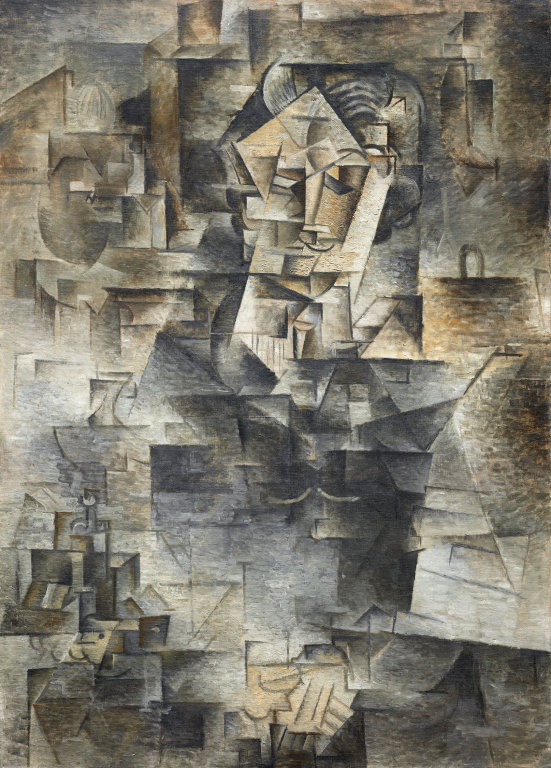
Pablo Picasso’s portrait of Daniel-Henry Kahnweiler makes a seated person emerge from a close mesh of angular planes. Facial features, clothing and surrounding space are broken into small, overlapping passages. The restricted palette keeps attention on their changing relationships. A recognizable human presence remains at the center, but it must be gathered from clues rather than grasped in a single glance.
Painted in autumn 1910, the portrait depicts the art dealer who became an important advocate of Cubism. Picasso retains details that anchor the sitter’s identity, including the suggestion of hair, a tie and hands resting together. Around these signs, solid form seems to dissolve into the painting’s intricate structure. The result gives portraiture a new kind of intimacy: recognition depends on sustained attention, as though the viewer were slowly rebuilding the person from the act of looking.
Read our guide to giclée prints or browse the Pablo Picasso collection.