
The Last Supper
“The Last Supper” is an iconic painting by the Italian Renaissance artist Leonardo da Vinci, created between 1495 and 1498 for the Dominican monastery of Santa Maria delle Grazie in Milan. The painting depicts the biblical scene of Jesus Christ’s final meal with his disciples before his crucifixion.
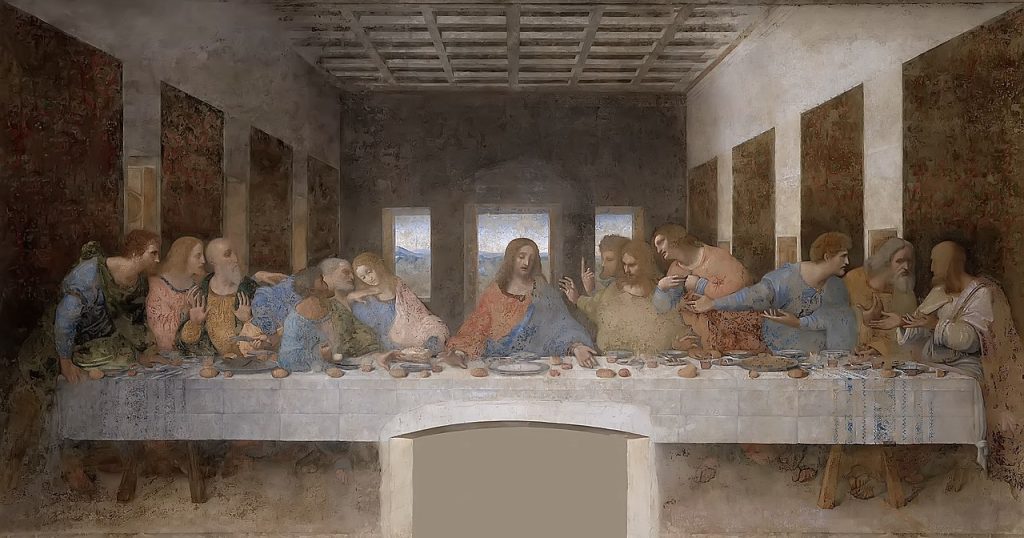
The painting is massive, measuring 15 feet by 29 feet and is painted on the wall of the monastery’s refectory. It features a group of 13 figures, with Jesus in the center, surrounded by his 12 disciples. Da Vinci’s mastery of perspective and composition is evident in the painting, with the figures arranged in a dynamic and balanced manner that draws the viewer’s eye towards the central figure of Jesus.
One of the most striking aspects of the painting is the sense of emotion conveyed by the figures. Da Vinci skillfully captures the individual personalities and reactions of each disciple, from the shocked and disbelieving expression of Thomas to the concerned and troubled look on John’s face. The sense of drama and tension in the painting reflects the gravity of the situation, as Jesus announces that one of his disciples will betray him.
The bread and wine connect the meal with the Christian tradition of the Eucharist. The apostles’ varied gestures and expressions dramatize the announcement of betrayal, while the composition directs attention toward Jesus at the center.
Leonardo painted The Last Supper on a prepared dry wall rather than using traditional fresco on wet plaster. This allowed him to work gradually and revise details, but the paint layer was fragile and began deteriorating soon after completion. The method helps explain both the subtle effects he sought and the painting’s long conservation history.
Over the years, “The Last Supper” has suffered significant damage, including water damage, war damage, and decay. Nevertheless, it remains a remarkable work of art and a testament to da Vinci’s genius as an artist and innovator. The painting has had a profound impact on art and culture, inspiring countless artists and writers and becoming a symbol of Christian faith and devotion. It remains one of the most famous and enduring works of art in history.