
The Scream
“The Scream” is an iconic painting by the Norwegian artist Edvard Munch, created in 1893. The painting is part of a series of works that Munch created, exploring themes of anxiety, alienation, and the fragility of the human psyche.
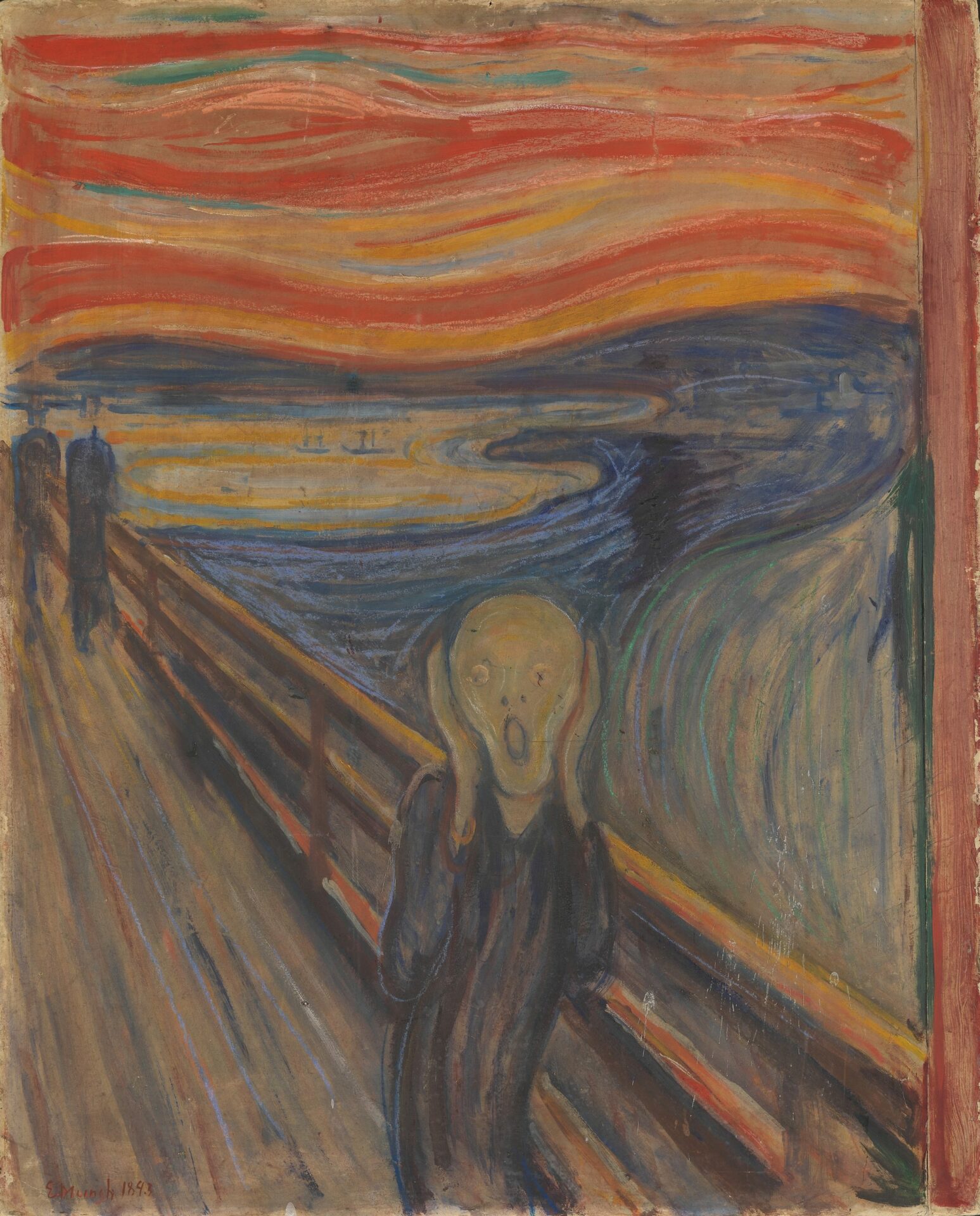
The foreground figure stands beside a railing on a road overlooking a fjord, with an open mouth and hands held against its head. Two people continue along the road behind it. Curving bands of red and orange in the sky contrast with the dark water and landscape, creating an unsettling atmosphere. The image need not be read simply as a person producing a scream: Munch’s accompanying account describes a scream felt in nature.
Munch associated the motif with an experience during a walk with two friends. In his written account, the sunset sky turned red, his friends continued ahead, and he remained overwhelmed by anxiety, sensing a scream passing through nature. The painting transforms this account into an expressive image rather than a literal record of an audible event.
The Scream is often interpreted as an image of anxiety and isolation. Its open-mouthed figure and undulating landscape invite viewers to connect personal emotion with the surrounding world. Such readings are interpretations, rather than proof of one fixed meaning intended for every detail.
The Scream has become a widely recognized cultural image, appearing in parodies and adaptations across different media. Munch returned to the subject in several versions in paint, pastel and print. His expressive treatment of color and form also helped shape later Expressionist art.
Munch’s own text connects the motif with an intensely personal experience of anxiety. That documented connection helps explain the emotional force of the work, without reducing it to a diagnosis of the artist.
In conclusion, “The Scream” is a powerful and deeply emotional work of art that has had a profound impact on art and culture. It is a testament to Munch’s artistic vision and his ability to capture the complexities of the human experience. The painting remains a beloved and enduring work of art, continuing to inspire and provoke thought and emotion in viewers around the world.