
Description
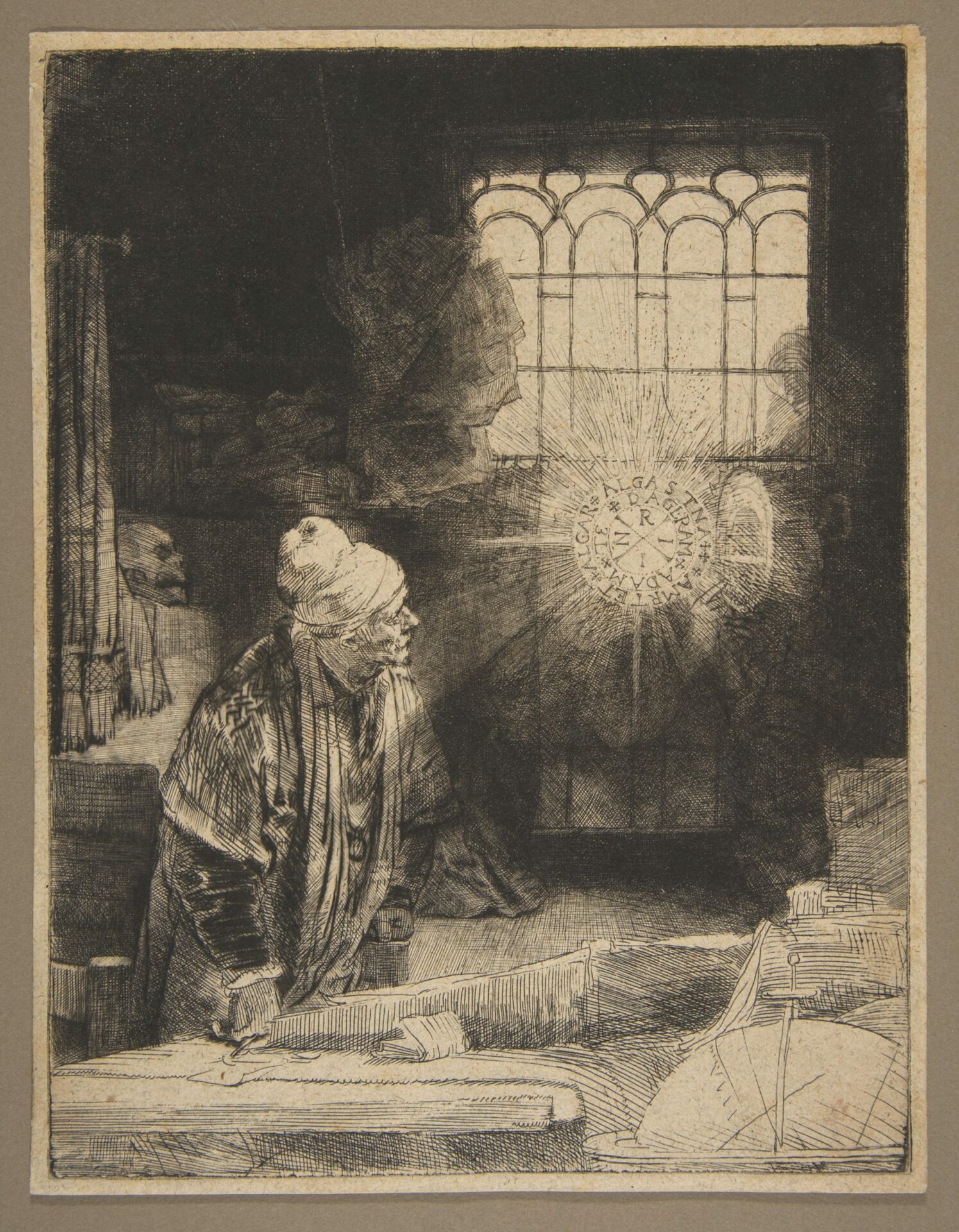
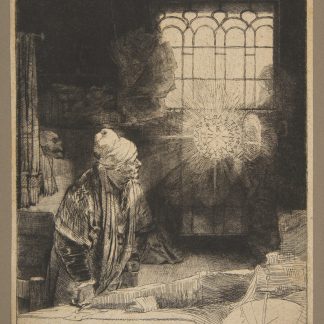
In the print traditionally known as Faust, a scholar stands beside a table in a dark room, facing a luminous disk at a window on the right. Arched panes give the interior another structure around that striking light. Traditionally known as Faust, the image keeps its precise meaning open while making an encounter between a human figure and an extraordinary brightness immediately compelling.
Made around 1652, the print combines etching, drypoint and engraving. Rembrandt gives the scene a worked surface through which illumination and enclosing shadow can share the image’s interest. The scholar’s presence remains particular even as the bright form invites questions beyond an ordinary interior. The work’s appeal lies in that unresolved encounter, where a person occupied within a familiar room seems to face something whose significance cannot be reduced to the practical objects around him.
Read our guide to giclée prints or browse the Rembrandt collection.
Reviews
There are no reviews yet.