Description
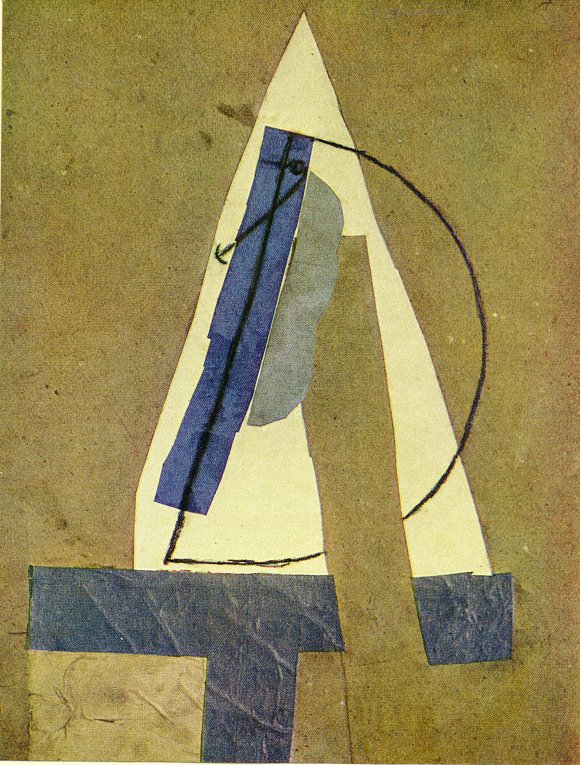
Tête by Pablo Picasso constructs a head from pasted paper and black marks. A half-circle suggests the profile, while a small circle and diagonal line become signs for an eye and nose. The sparse arrangement makes recognition surprisingly immediate, allowing a handful of simple elements to create a human presence without a fully modeled face.
Made in 1913, the work uses papiers collés, or pasted papers, with black chalk on card. Picasso treats the materials as visible parts of the image rather than concealing them beneath a painted illusion. Its appeal lies in the shift between things physically attached to a surface and the head they can suggest together. The work invites playful, attentive looking, demonstrating how modest shapes acquire another identity through their position and relationship within a composition.
Read our guide to giclée prints or browse the Pablo Picasso collection.