
Description
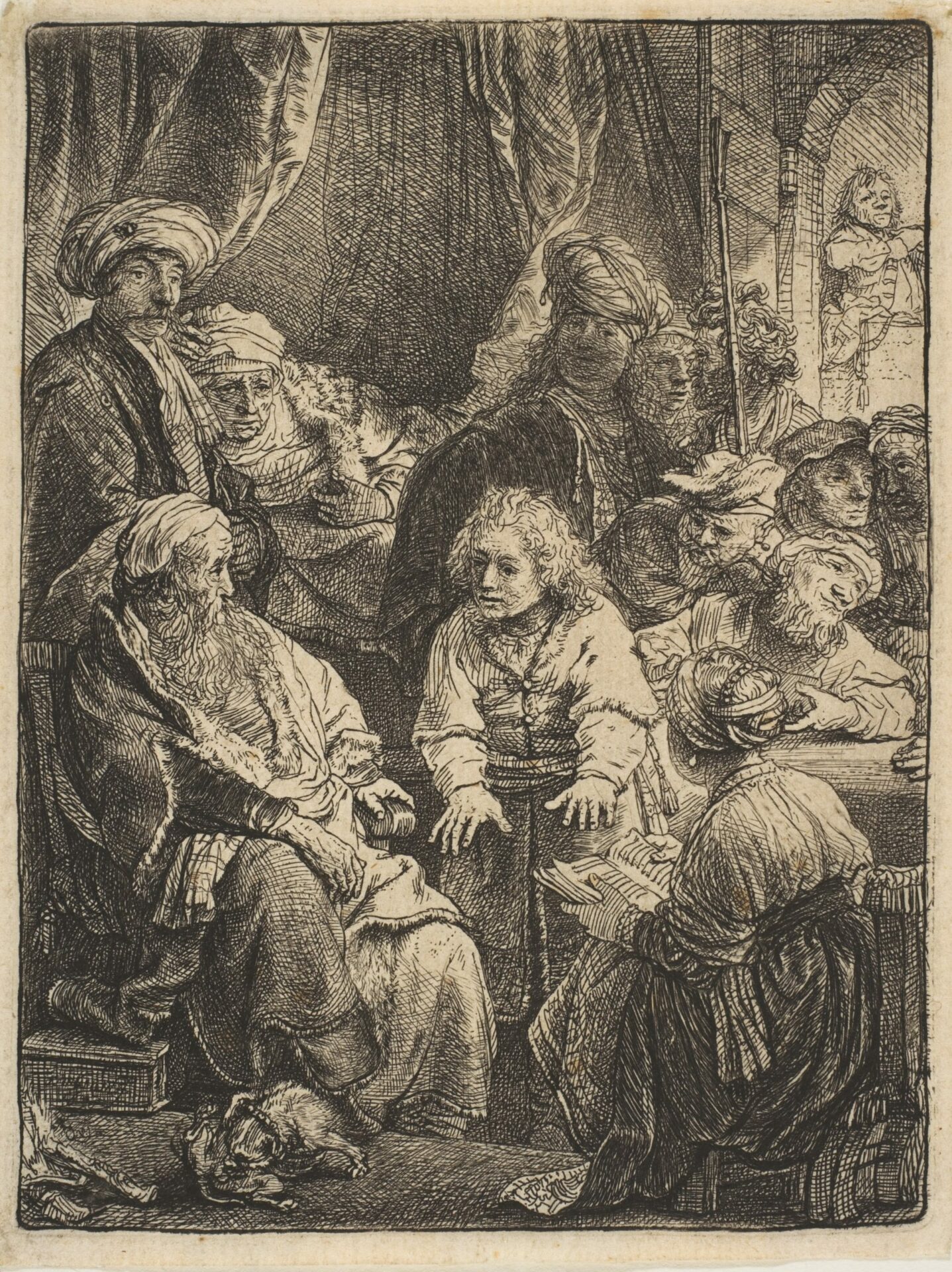
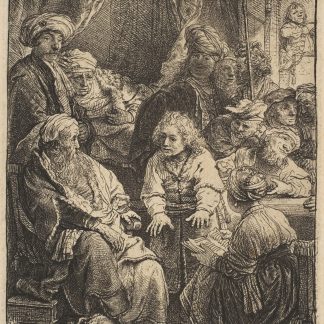
In Joseph Telling His Dreams, Rembrandt places the gesturing young speaker amid a crowded interior, with listeners seated at the left and right. Dense hatching gives their shared room a closely worked presence. The telling of dreams becomes a visible human exchange, allowing the young speaker and the company receiving his account to carry the scene without the dreams themselves needing to be depicted.
Made in 1638, the etching gives the episode a lasting printed presence. Rembrandt makes speech part of visible human action, allowing the bodies gathered around Joseph to contribute to the scene’s interest even though the dreams themselves belong to his telling. The work approaches a larger narrative through one moment of exchange. Its appeal lies in that concentration, where the act of recounting an experience can become as engaging as an event directly performed.
Read our guide to giclée prints or browse the Rembrandt collection.
Reviews
There are no reviews yet.