
Description
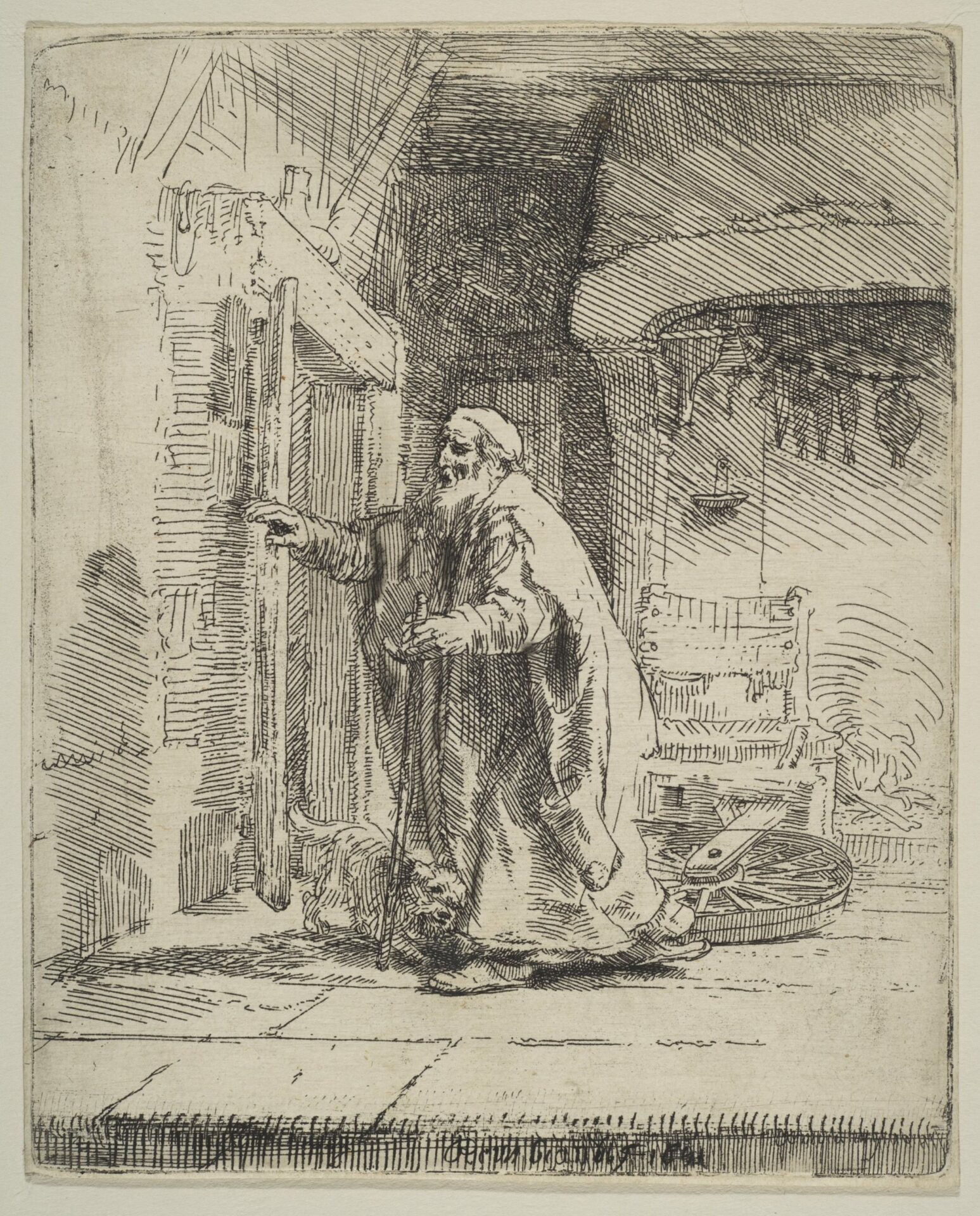
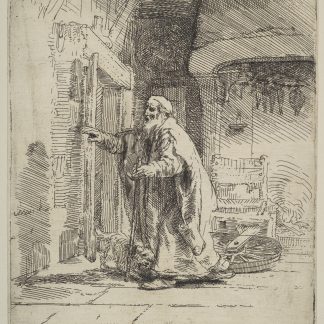
In The Blindness of Tobit, Rembrandt shows an older man feeling his way near a doorway, with a small dog below at the left and stairs within the room. The subject of Tobit’s blindness becomes immediate through the body’s searching movement. Familiar interior forms gain another significance when encountered without sight, making vulnerability a tangible part of the scene’s human interest.
Made in 1651, the etching includes touches of drypoint. Rembrandt gives the episode the close material form of a work on paper, allowing one represented moment to carry the wider story’s resonance. Its interest lies in the relation between a person and the conditions under which he occupies the world. The print approaches a sacred subject through human experience, making bodily vulnerability part of the scene’s meaning rather than merely a symbol outside ordinary life.
Read our guide to giclée prints or browse the Rembrandt collection.
Reviews
There are no reviews yet.