

Description
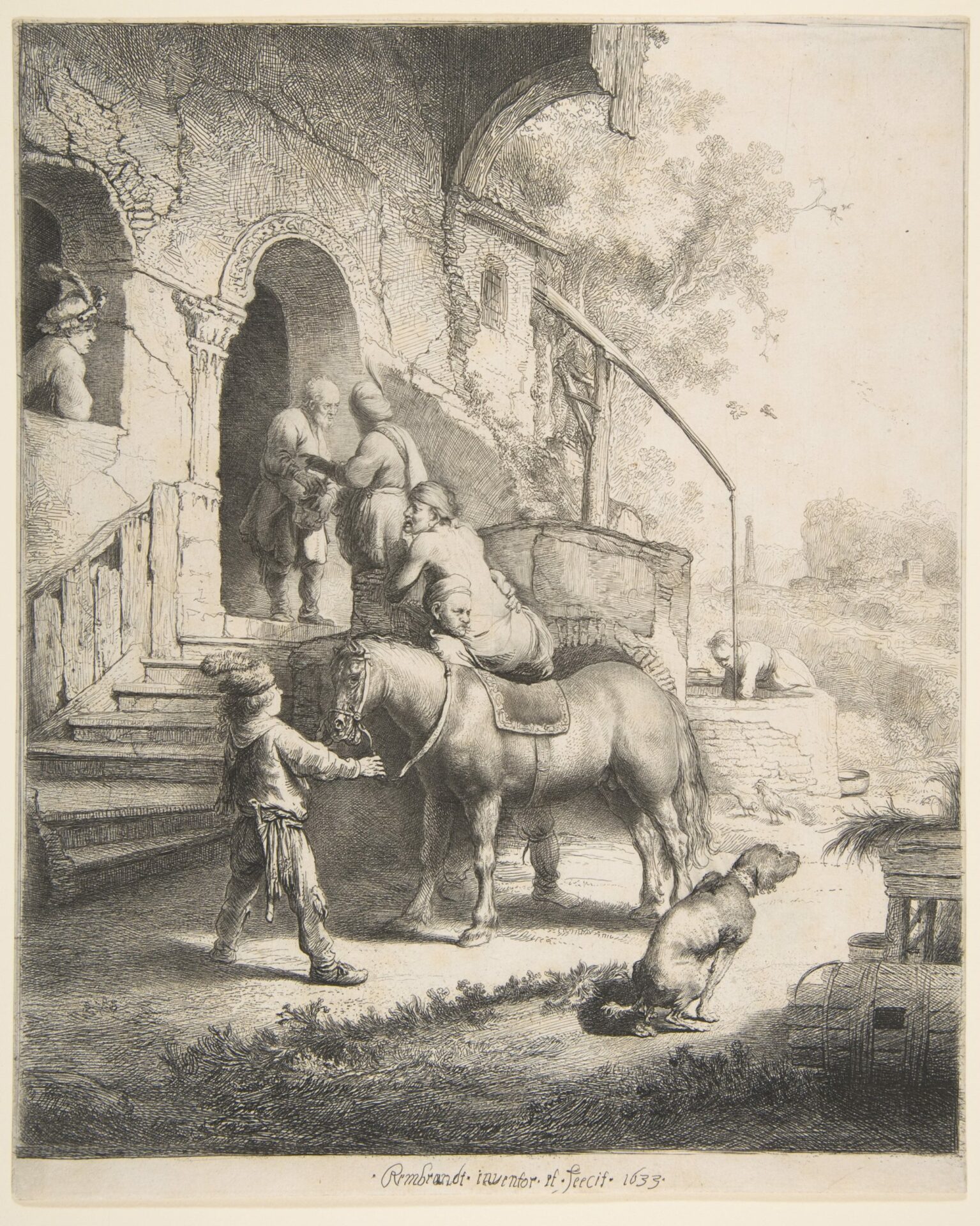
An injured rider and horse occupy an inn setting, steps rising at the left and a dog appearing in the foreground at the right. Rembrandt gives The Good Samaritan a practical human scene in which aid involves movement and arrival. The architectural edge connects the figures with shelter, while the nearby animal gives the foreground its own distinct point of attention.
The 1633 print combines etching, engraving and drypoint. Its biblical subject brings compassion into an ordinary setting, connecting a moral action with the practical movement of people and animals. Rembrandt lets the scene’s relationships carry the story rather than treating kindness as an abstract emblem, making the encounter tangible through the figures’ placement and the space surrounding their activity.


Reviews
There are no reviews yet.