

Description
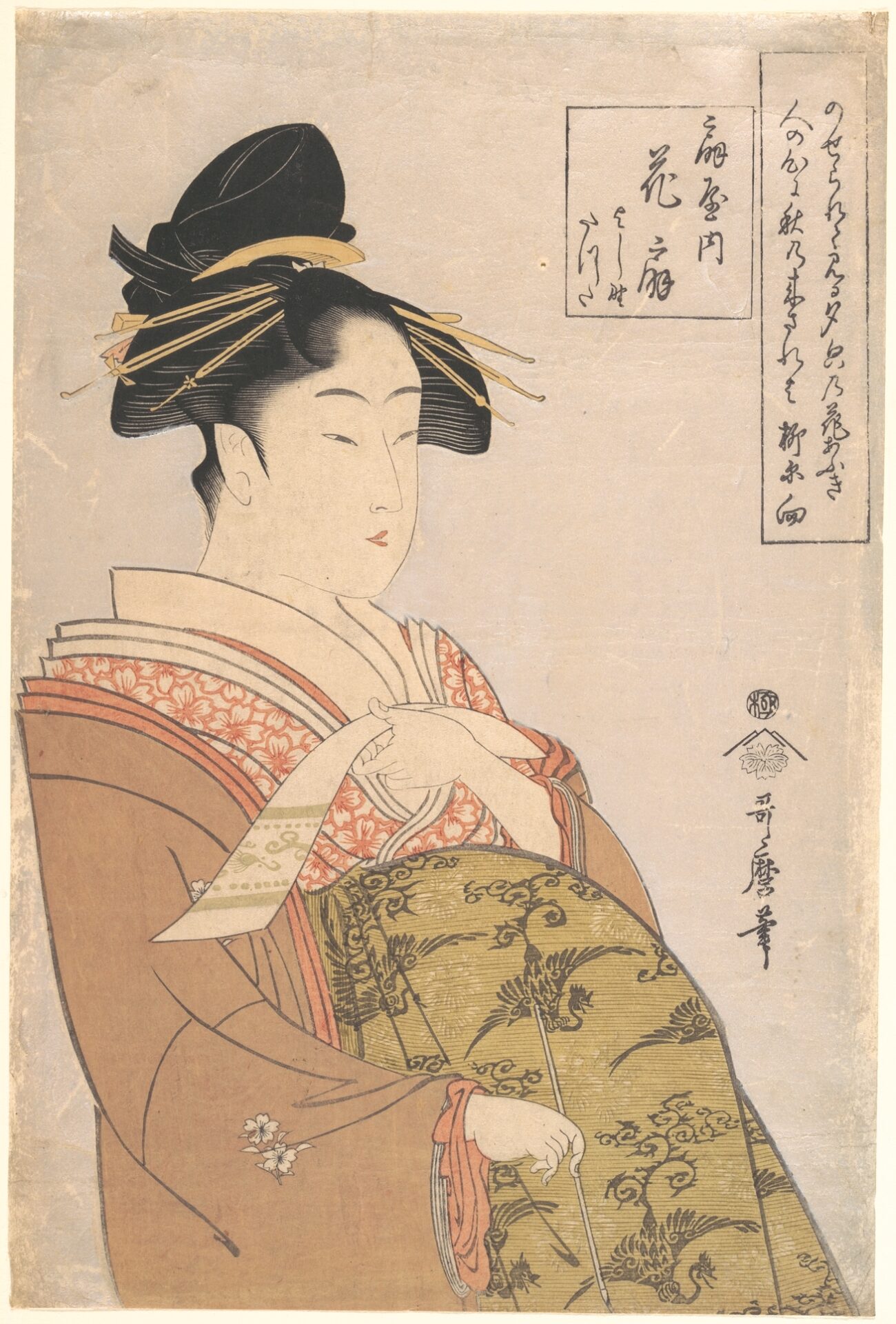
Hanaōgi of the Ōgiya turns obliquely in a close portrait, her elaborate coiffure above a pale pink striped robe and broad patterned obi. Poems occupy the upper right, joining written and human presence. Kitagawa Utamaro gives the named Yoshiwara courtesan an individual encounter through the arrangement of face, fabric and text, allowing ornament to frame rather than replace the person represented.
Dating to around 1793–94, the woodblock print uses ink and color on paper. Its Edo-period identity places the subject within a specific visual culture while leaving the immediate figure central. The work’s appeal lies in the particularity of a named presence preserved in print, encouraging sustained looking without requiring a narrative of an occasion or assigning unsupported thoughts and actions to the woman represented.

Reviews
There are no reviews yet.