

Description
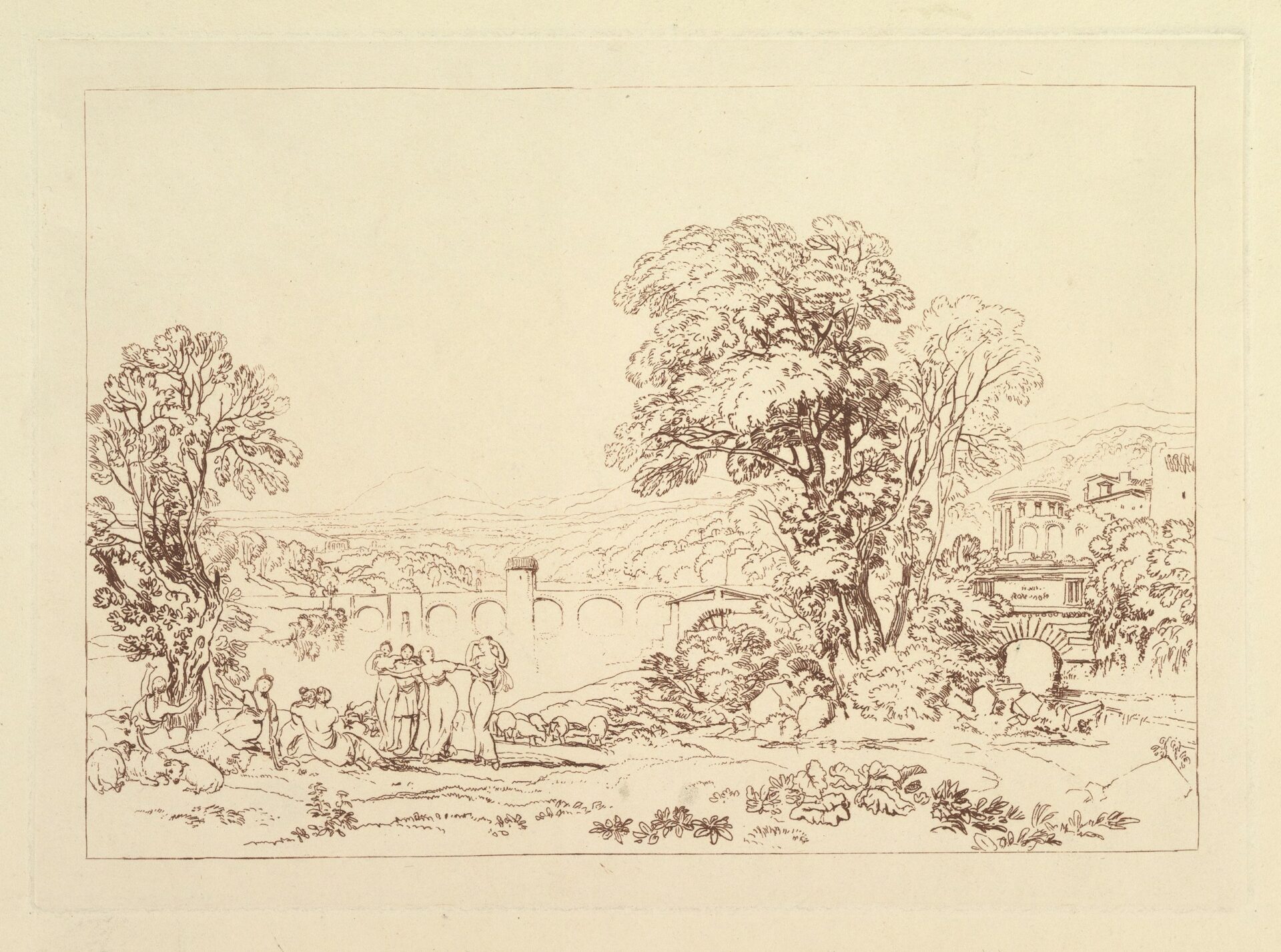
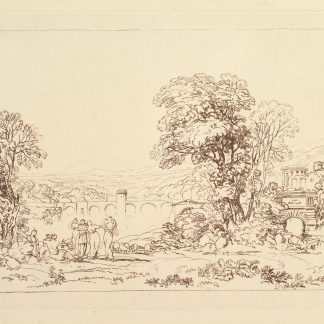
Apuleia unveils herself before shepherdesses in a landscape where a multi-arched classical bridge spans a river near a temple. J. M. W. Turner invented her as a wife for the shepherd mentioned in Ovid’s Metamorphoses, bringing literary imagination into the pastoral scene. The foreground encounter gives the wider vista a human focus, connecting the figures with the architecture and water beyond them.
Dated 1813–23, the etching records Turner’s first stage for a Liber Studiorum plate that he never published. The composition derives from his painting exhibited in 1814, but this image retains the lighter character of etched structure. The open marks make figures and landscape readable without a developed mezzotint atmosphere, allowing the classical setting and invented encounter to share the paper through their arrangement rather than broad tonal masses.
Reviews
There are no reviews yet.