
Description
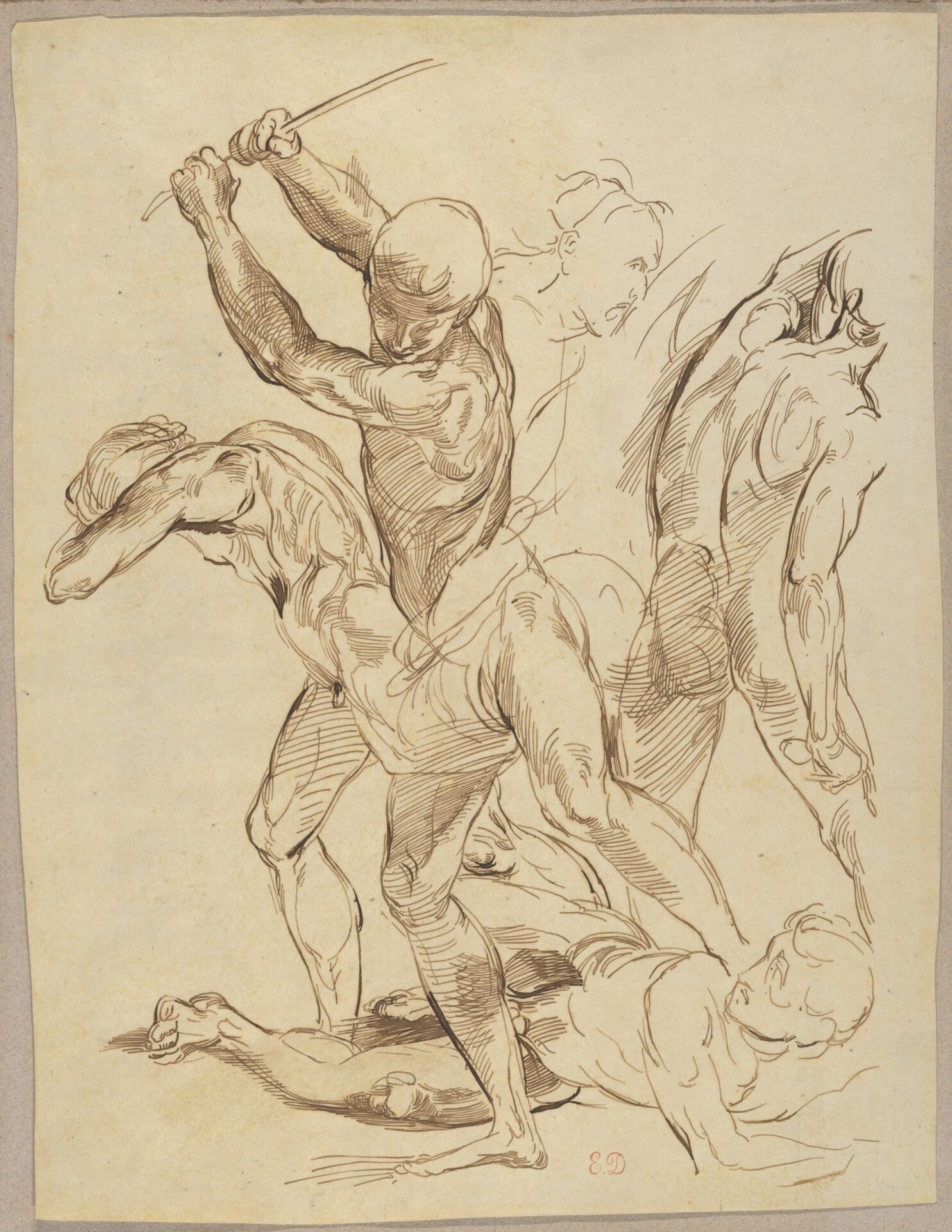
Overlapping limbs animate the combat of nude men in Eugène Delacroix’s drawing after Raphael, with a raised arm toward the upper left and a falling figure below. The pale paper lets the bodies’ competing directions stand out. The scene brings another artist’s invention into a concise study of action, making physical relationships the center of attention.
Made around 1823, the drawing uses pen and brown ink. Raphael is the source artist, not a collaborator on Delacroix’s sheet. The distinction matters to the work’s character as an act of looking across artistic traditions. Delacroix gives the inherited subject a concise material form, allowing the relation between figures to be considered through drawing. Its appeal lies in the meeting of vigorous action and attentive study, where another artist’s invention becomes a living source of inquiry.
Read our guide to giclée prints or browse the Eugène Delacroix collection.

Reviews
There are no reviews yet.