
Description
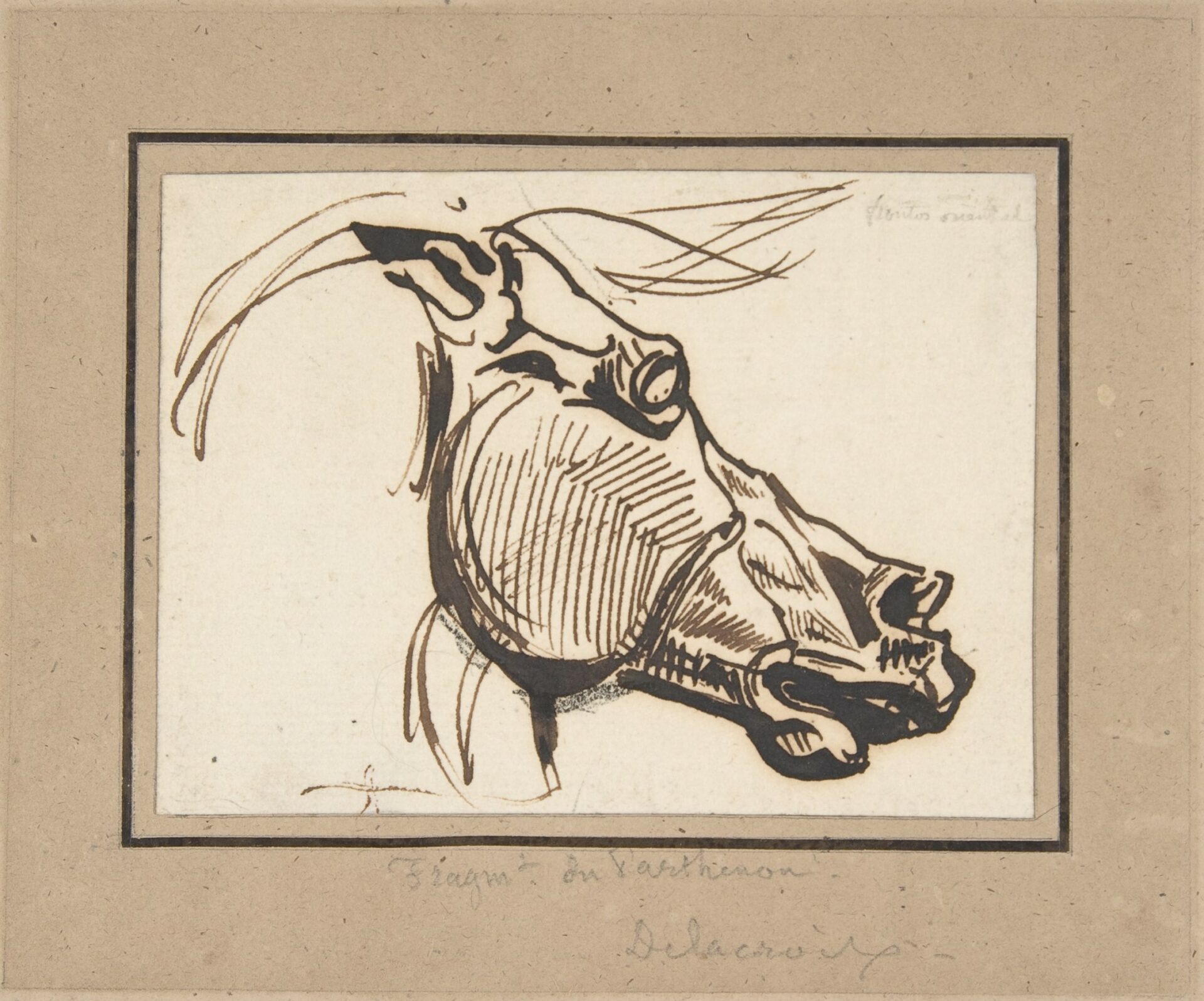
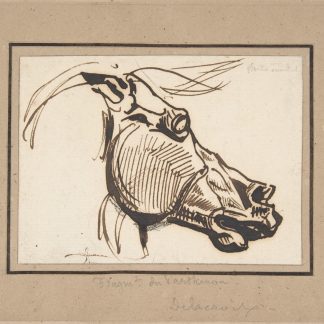
A horse’s head appears in dark ink profile in Eugène Delacroix’s drawing after the Parthenon. The eye, nostril and mouth give the animal distinct features, while diagonal marks develop the neck. The ancient model becomes a subject for renewed attention, joining a form inherited from sculpture to the immediacy of the drawing hand.
Made around 1825, the drawing uses pen and brown ink over a little black chalk on laid paper. It is Delacroix’s study after the Parthenon rather than an independent depiction of a live horse. The work’s interest lies in that act of translation, where the drawing hand encounters a form already shaped by another artistic tradition. Its appeal joins the particular presence of the horse’s head to the attentive process of studying it.
Read our guide to giclée prints or browse the Eugène Delacroix collection.
Reviews
There are no reviews yet.