Description
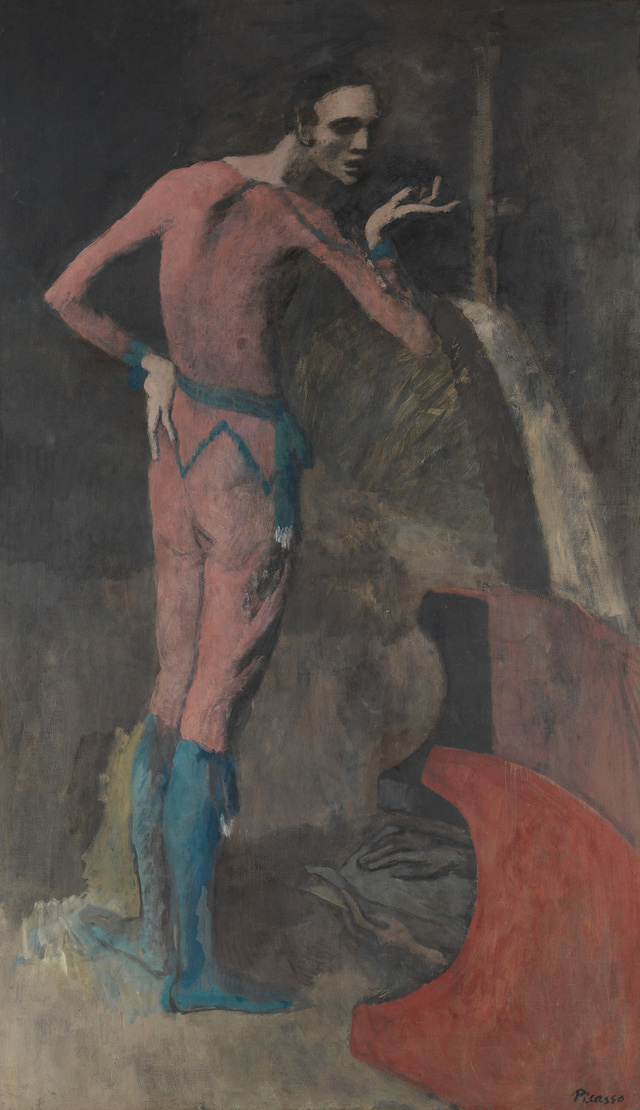
A slender performer stands in Pablo Picasso’s The Actor, the elongated body and expressive hands giving the figure an unusual theatrical presence. The pose holds attention through its balance of delicacy and control, suggesting a gesture that has not yet completed its meaning. Rather than surrounding the performer with a busy spectacle, Picasso lets the person carry the image’s quiet drama.
Painted in 1904–5, the work stands near Picasso’s movement from the Blue Period toward the world of acrobats and traveling entertainers. Its stretched proportions retain something of the earlier figures, while the theatrical subject opens a different human setting. The painting’s appeal lies in this poised transition. The actor feels both vulnerable and self-possessed, inviting attention to how a body can become expressive through the slightest adjustment of hands, posture and presence.
Read our guide to giclée prints, browse more Pablo Picasso prints, or explore Acrobat on a Ball.